 I have just come across a fascinating document published last year by Ukrainian-Jewish Encounter – a private multinational initiative aimed at strengthening mutual comprehension and solidarity between Ukrainians and Jews – tracing the origins of Jews in Ukraine from antiquity to the 20th century. A Journey through the Ukrainian-Jewish Encounter is based on an exhibition that toured Canada in 2015 and documents how the stories of these two often antagonistic peoples are intertwined and incomplete without one other.
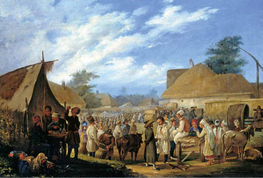
Ukraine itself is a thoroughly modern concept. Prior to independence from the Soviet Union in 1991, the country had only experienced two very brief and chaotic wartime glimpses of independence – first in 1918 and again in 1941. The territory of modern-day Ukraine has for many centuries been the home of diverse peoples, including one of the oldest and most populous Jewish communities in the world. This blog post is a brief and very distilled version of the first part of the Journey and I will continue the story in my next post. I thoroughly recommend following the link at the bottom of this page to read the full document. As well as fascinating historical information, it contains some wonderful photographs and illustrations. The Jewish presence on Ukrainian lands dates all the way back to antiquity. Jews first came to the area as merchants more than 2,000 years ago and began to settle in the coastal towns of Crimea. These Jews became known as Krymchaks. They were later joined by a Jewish sect known as the Karaites that preserved its ancient Biblical faith while rejecting the Talmud and embracing the practices and the Turkic language of the local population. Some centuries later, during the early medieval period, travelling Jewish traders and merchants settled in the territory that became Transcarpathia (later in Hungary before becoming part of Ukraine). And around the 9th century Jews fleeing persecution in the Byzantine Empire found safe haven in the Khazar Khaganate, which encompassed Kiev and much of the area to the south and east, where they were accepted as citizens. The Khazar Khaganate came to an end in the 960s with the creation of Kyivan Rus' (960–1240), a conglomerate of principalities in central Ukraine that united several Slavic and other groups. In 988 Prince Volodymyr adopted the Byzantine Greek form of Christianity as the official religion of Kyivan Rus', and Eastern Orthodoxy has remained the dominant religion in Ukrainian lands ever since. Although Church writings in Kyivan Rus' included anti-Judaic themes, the Kyivan princes welcomed the role Jews played in trade and finance, and from the late eleventh century Kyivan Rus' became a refuge for Western European Jews fleeing persecution by the Crusaders. After unifying the southwestern areas of Kyivan Rus', Prince Danylo of Galicia-Volhynia invited Armenians, Germans, Jews, and Poles to settle in the area, bringing with them artisanal and commercial skills. Interestingly, my grandmother talked about an Armenian quarter in the shtetl of Pavolitch, where she grew up. Although some miles east of Galicia-Volhynia, its origins may have dated from this era. In the 13th and 14th centuries small Jewish communities developed in Galicia-Volhynia, and Jews helped establish Lviv as a centre for international trade between Central Europe and lands to the east. The Grand Duchy of Lithuania later assumed control over these regions, affording Jews royal protection, but not granting them the rights of citizens. Jews were subject to a raft of economic measures restricting them to work in jobs such as currency exchange and moneylending, breeding the stereotype of the miserly Jewish moneylender. Jews tended to reside in, and help develop, urban areas, making towns such as Lutsk important centres of Jewish life. Around the same time, Polish princes offered protection to Jews, welcoming them to settle in Poland. This encouraged significant numbers of Jews fleeing persecution in Western Europe to migrate to Poland. In 1507 the Grand Duke of Lithuania and King of Poland granted the Jews a charter of protection that exempted them from the jurisdiction of municipal authorities, and offered security against physical attack and the right to practice their religion. These protections prompted Yiddish-speaking Jews from Central Europe to migrate eastward in significant numbers, living among local Christian Ukrainians and other ethnic groups. Small communities of these Ashkenazi Jews could be found in several northern Ukrainian towns, in contrast to the earlier Jewish inhabitants there, whose primary language was probably Slavic. Further east, the Crimean Khanate covered much of present-day central and eastern Ukraine from the 15th to 18th centuries. As elsewhere in the medieval Muslim world, Jews in the Crimean Khanate were considered a tolerated monotheistic minority and were allowed to engage in commerce and freely practise their religion, as long as they accepted a subordinate status and kept a low profile. The largest migration of Jews eastward into Ukrainian lands came as a result of Poland’s territorial expansion and colonising efforts following the Union of Lublin in 1569, which united the Kingdom of Poland and the Grand Duchy of Lithuania and created the Polish-Lithuanian Commonwealth (1569–1795). In the Commonwealth, Polish nobles established around 200 private towns around their estates, which attracted considerable numbers of Jews. Jews often administered the nobles’ estates, managing the land, mills, taverns, distilleries, and wine-making operations. They also collected taxes for the Polish nobles and provided credit to both the landlords and peasants. Jewish merchants and artisans, driven out of several Polish cities by their economic competitors, also settled in these towns where they established regular markets and fairs. Jews often found themselves caught between the nobility, who expected them to maximise profit, and the peasants, who resented the economic burdens imposed on them. Between 1569 and 1648 the number of Jews in the provinces of Volhynia, Podolia, Kyiv, and Bratslav increased from 4,000 to 52,000, encompassing 115 localities. Jews in the Polish-Lithuanian Commonwealth gained significant autonomy with Jewish regional councils and a central body of Jewish self-government. Each Jewish community (kehilah) had its own kahal, or administration, run by leading members of the Jewish and Rabbinical community. Each kahal sent representatives to meetings of a national Jewish council, the Va’ad (or Sejm in Polish) which represented the Jews of the Commonwealth before the king and the Polish parliament. The council also debated and legislated major religious and socio-cultural issues, organised responses to attacks on Jews, served as a high court of appeal for Jewish community courts and apportioned among the communities liability for the collective tax on Jews. It was in the small market towns owned by the nobility of the Polish-Lithuanian Commonwealth that Jews created the shtetl culture mythologised in Jewish folklore. Shtetl is a Yiddish word of Germanic origin meaning ‘small town’ and commonly refers to a small market town with a large Yiddish-speaking Jewish population, which existed in Central and Eastern Europe before the Holocaust. It is distinct from a dorf (village) and from a shtot (large town, city). A shtetl would generally have between 1,000 and 15,000 Jewish inhabitants, comprising at least 40 percent of the town’s population. The shtetl was home to all classes of Jewish society, from wealthy entrepreneurs to petty shopkeepers, innkeepers, shoemakers, tailors, water carriers, and beggars. Cultural life was regulated by the Jewish religious calendar and traditional customs, characterised by attitudes, habits of thought, and a unique rhetorical style of speech full of allusions rooted in Talmudic lore. Despite widespread poverty and episodes of anti-Semitic violence, the shtetl produced a vibrant folk culture and a remarkably expressive language, Yiddish. The Polish lands where so many Jews had settled became part of the Russian Empire during the partitions of Poland under Catherine the Great in 1772–95. Since the late fifteenth century, Jews had been forbidden to settle in Russia, but with the annexation of Polish territories, Catherine became the ruler of the largest Jewish population in the world. Influenced by Enlightenment thinkers and hoping to benefit economically from Jewish trade, Catherine resisted pressure from the Orthodox Church to expel the Jews and settled on a compromise. She created the Pale of Settlement. Jews were barred from Russian cities and restricted to living in the formerly Polish lands, territory that falls within present-day Ukraine, Belarus and Lithuania. Some assimilated Jews received special permission to live in the major imperial cities (including Kyiv), others took up residence in the cities illegally. The Pale lasted until the fall of the Russian Empire in 1917. Click here to see the document on which this article is based ttps://ukrainianjewishencounter.org/media/UJE_book_Single_08_2019_Eng.pdf?fbclid=IwAR2D2QAuBtjsIqF1kHi4eRUlxBZT-UFPR3usj0741Cp3nnnouJT1icJGphM
1 Comment
I have just watched a fascinating little documentary about Fania Brantovskaya, now in her 90s, who conducts walking tours of old Jewish Vilnius (Vilna) in Yiddish. Listening to her speak I was vividly reminded of my own grandmother, Pearl, and the recordings my father made of her talking about her life back in Russia. Fania’s intonation, the cadence of her language, mirror almost exactly my grandmother’s speech. Fania was born in 1922. She had just started university in 1941 when the Nazis occupied Vilna. She tells how two Lithuanian policemen knocked on her door at 6am on 6 September and told her family they had to move into the ghetto, giving them just half an hour to pack. Fania lived with her parents and sister in a crowded apartment shared with four other families. She points out their three windows, on the middle floor of a large three-storey building. Fania guides us past the hospital, school, theatre and library that continued to function within the ghetto walls. Indeed, the Vilna ghetto was known as the Jerusalem of the ghettos for its intellectual and cultural richness. But death was never far away, with regular deportations from the ghetto to Ponary, now Paneriai, a suburb of Vilnius, where tens of thousands of Jews were murdered. Fania’s father changed her birth date to make her appear four years younger than she actually was, enabling her to avoid the call up to work in the Nazis’ forced labour camps. Instead she joined the United Partisan Organisation that was formed in the ghetto in January 1942 by the poet Abba Kovner, among others, as a means of Jewish self-defence and to sabotage German industrial and military activity. The partisans smuggled arms, food and medicine, and found ever more ingenious ways of doing so. Chimney sweeps carried guns in false-bottomed cases, while wounded men and women hid supplies in their bandages. Fania worked as a messenger, using the slogan “Lisa is calling,” in honour of a partisan who had died early during the resistance. After more than two years in the ghetto’s stifling narrow streets, in September 1943 Fania managed to escape to join other partisans living in the forest a two-day march away. She couldn’t have known at the time, but her escape was to precede the liquidation of the ghetto by just a few hours. Fania never saw her family again. They were divided up and taken to different concentration camps across the area, where they perished. From September 1943 until the end of the war, Fania lived in the forest, where she and her fellow partisans continued their struggle against the Nazis and their local collaborators. They lived in tents and underground shelters dug from the earth, with walls of wooden planks and foliage pulled over for cover, sleeping on pieces of wood covered with spruce branches. They had very little to eat, surviving mostly on grain flour donated by local people and hot water. Some locals would willingly give them food, she says, but others would not. Nevertheless, after two years in the ghetto, Fania says, the forest made her feel like a human being again. Today Fania works as a librarian at the Yiddish Institute in Vilnius, where she created a collection of Yiddish books. She leads walking tours of the city of her youth, keeping alive the language and memory of her family and the tens of thousands of other Vilna Jews murdered at Ponary and elsewhere. Fania is one of just two or three thousand Jews living in Vilnius today, a city that had been a major Jewish population centre for over four hundred years. Around 70,000 Jews were resident there by 1941, close to half the city’s population. Through much of its history, Vilna was a hub of Jewish culture and learning. The definitive edition of the Talmud was printed on the Vilna presses, the famous Talmudist Elijah ben Shlomo Zalman—known as the Vilna Gaon—was one of the most authoritative Jewish scholars since the Middle Ages. And YIVO, an organisation dedicated to the study of Yiddish life and language, was founded in Vilna. After the war, Vilnius became part of the USSR, as capital of the Lithuanian Soviet Socialist Republic. I visited in 1989, shortly before Lithuania finally gained lasting independence. Even in Soviet times, the city had a lively and attractive air, but it has changed a lot since then--the historic centre has been restored and a buzzing arts and entertainment culture has taken root. It must be time for a return visit, before Fania and her walking tours are no more. The documentary, by Edita Mildazyte, can be viewed here: I have written before about the revival of the Yiddish language, in particular in the US where a hit Yiddish production of Fiddler on the Roof is currently running in New York. But many will be surprised to learn that Yiddish lives on in parts of Eastern Europe too, in a few isolated communities that survived the Holocaust and its destruction of a once vibrant Jewish culture. A group of linguists and historians from Indiana University spent seven years from 2002-2009 interviewing nearly 400 elderly Yiddish speakers across rural Ukraine, Moldova, Romania, Hungary, and Slovakia and documented their journeys in photographs and video. They named their project AHEYM meaning “homeward” in Yiddish, and doubling up as an acronym for “Archives of Historical and Ethnographic Yiddish Memories.” In subsequent years AHEYM expanded its work into Latvia and Poland. The project is led by linguist Dov-Ber Kerler and historian Jeffrey Veidlinger and explores Jewish life in Eastern Europe before, during and after World War II. The interviews cover a range of topics, including family and religious life, community structure, cultural activities and recreation, education, health, food and folklore, as well, of course, as harrowing tales of Holocaust survival and life under the Communist regime. They include musical performances, anecdotes, jokes and folk remedies. Some present guided tours of local sites of Jewish memory. These testimonies bring to life the story of those Jews who stayed behind. The interviewees were mostly born between 1900 and 1930 – they would have grown up in the shtetls of Eastern Europe and not only survived the Holocaust, but rebuilt their lives in the very places where some of the most horrific events of the 20th century occurred. The majority of Jews who survived the war in Eastern Europe soon abandoned the shtetl and the Yiddish language, following the call of the metropolis or a life abroad, where they lost many of the local customs and practices that had defined Jewish identity in the shtetl. But a small number of Jews came back to these small communities after the war. Some returned after evacuation – often to a different town from the one they had left, others came out of hiding. Some literally crawled out of mass graves to reclaim their lives. The AHEYM team has catalogued, annotated, and translated into English nearly 800 hours of videotaped interviews in Yiddish with such survivors. The recordings are preserved at Indiana University’s Archives of Traditional Music and form part of the EVIA Digital Archive Project. Most of the video clips lack English subtitles, but even as a non-Yiddish speaker I found them addictive. I can’t understand much of the content, but I recognise the accents and the cadence of the language. They recall the recordings I have of my own grandmother telling stories similar to many of those in the AHEYM archive. Some of the videos are funny, some are strange and of course, some are chillingly harrowing. “When they called us here for work, how could we have imagined that they would murder us?” remembers an old man near Berdichev. “My mother asked me to watch the bread while she went to work. That’s what saved my life and that’s why I bake bread every day, in honour of my mother who kept me alive with her request.” Visit the AHEYM website for more information: http://www.iu.edu/~aheym/index.php A selection of the videos is available on the AHEYM Facebook page https://www.facebook.com/aheym.iu/ And a full list of the recordings can be found here http://eviada.webhost.iu.edu/atm-subcollections.cfm?sID=69&pID=162 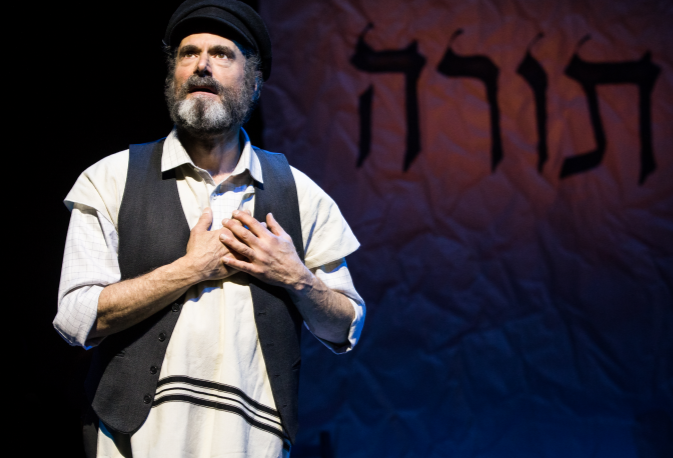 I have written before about the revival of the Yiddish language and was interested to read about a Yiddish version of Fiddler on the Roof that has taken New York by storm. A Fidler afn Dakh, as it is called, opened last year at the Museum of Jewish Heritage before moving to a large, commercial theatre, Stage 42, in February. The Yiddish production comes more than half a century after the musical first opened on Broadway in 1964. It would become the longest-running musical in Broadway history, as well as a blockbuster film. It is the authenticity of the latest production that has wowed critics and audiences and makes the show so moving. Yiddish is, of course, the language that the fictional dairyman Tevye and his neighbours would have spoken. Fiddler is based on a series of short stories by Sholem Aleichem set in Anatevka, a fictional shtetl near Kiev in present day Ukraine. My family, too, came from a shtetl near Kiev and in fact my great-grandmother and great-great-grandmother once met the famous Yiddish writer during a holiday at a country dacha. In the course of this meeting, they discovered that they were related. The family name on both sides was Rabinovitch, although I have never actually managed to put my finger on the branch of our family tree that links me to Sholem Aleichem. Yiddish was once spoken by around 12 million people and transcended national boundaries. But the language was almost wiped out by the holocaust. Almost...but not quite. Jewish immigrants to America brought Yiddish with them and plays in Yiddish were common in New York in the late 19th and early 20th centuries. There was even a Yiddish theatre district in Manhattan’s Lower East Side. But you might think that the potential audience for a Yiddish production of Fiddler today would be pretty limited. The show’s director, Joel Grey, told the Financial Times, “I thought it was kind of crazy, that six people would understand it”. Only six out of a cast of 29 spoke any Yiddish at the outset, three of them being native speakers. However, anyone already familiar with other stage or screen versions will be able to understand much of the production even without knowing Yiddish, and it has English and Russian surtitles to help the uninitiated. But for those who grew up surrounded by Yiddish, the production is likely to strike a particularly deep emotional chord. “For me, it’s not just the fusillade of familiar words and phrases: meshuga, geklempt, zay gezunt. It is the sound of my own grandparents and all that they lost in leaving their Anatevkas,” wrote Jesse Green in The New York Times. Yiddish was the language of the mundane, the every-day. It was the ‘mame-loshn’, or mother tongue, as opposed to ‘loshn-koydesh’, or holy tongue, meaning Hebrew. Grey calls it “the language of the outcast”. Much of the Jewish intelligentsia quickly abandoned the language on arrival in the West in order to assimilate. Yiddish represented the poverty and persecution of the world they had left behind. Also helping the authenticity of the piece is its simplicity. The big Broadway show style is stripped away in favour of a greater emphasis on the simple human choices and everyday trials and emotions of the struggle to preserve Jewish traditions in an era of ever greater assimilation and persecution. The production “though not without its comic moments, is suffused with a hauntingly melancholic aura that seems to foretell the annihilation of the world depicted on stage,” writes Max McGuinness in the FT. For more information, the production’s website can be found at http://fiddlernyc.com/#home. The Financial Times article about it is available here https://www.ft.com/content/f38136ee-cef6-11e9-b018-ca4456540ea6 And The New York Times review here https://www.nytimes.com/2018/07/17/theater/review-yiddish-fiddler-on-the-roof.html 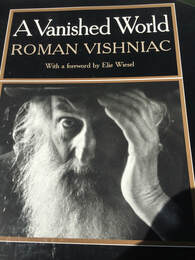 I recently received as a gift a stunning book of photographs by the Jewish photographer Roman Vishniac. The photos were taken in the shtetls of eastern Europe in the 1930s, just before those communities were wiped out forever.
A Vanished World was published in New York in 1983. It is difficult to get your hands on a copy of it now, but the photographs it contains serve as an important historical document. Vishniac was born in Russia, but was living in Germany in the 1930s. He took the photographs between 1934 and 1939, when the Nazis had already taken power, and when anyone with a camera was at risk of being branded a spy – and in communities where observant Jews did not want to be photographed for religious reasons. But he had the foresight to see what few others could possibly imagine, that the Nazis would systematically wipe out the shtetls and Jewish communities that had existed and maintained the same way of life for hundreds of years. He made it his mission to not let their inhabitants, along with their occupations and preoccupations, be forgotten. “I felt that the world was about to be cast into the mad shadow of Nazism and that the outcome would be the annihilation of a people who had no spokesman to record their plight. I knew it was my task to make certain that this vanished world did not totally disappear”, he says in his commentary on the photos. Vishniac used a hidden camera, at a time when photography was in its infancy and equipment was bulky and unsophisticated. He put himself at great risk, and was thrown into prison for a time, but still he persisted in his mission, constantly running the risk of being stopped by informers or arrested by the Gestapo. He managed to take around 16,000 photographs, although all but 2,000 were confiscated and, presumably, destroyed. He chose to include around 200 in this book, the images that he considered the most representative. He travelled from country to country, taking in Germany, Austria, Czechoslovakia, Poland, Ukraine and Lithuania, from province to province, village to village. He captured images of slums and markets, street scenes and school houses, from the wrinkled faces of old men and careworn mothers to pale religious scholars and hungry, wild-eyed children. The images are far from anonymous. Vishniac got to know the people he photographed, he often availed of their hospitality and spent time working and living among them. He slept in a basement that was home to 26 families, sharing a bed with three other men. “I could barely breathe, Little children cried; I learned about the heroic endurance of my brethren,” he wrote. He spent a month working as a porter in Warsaw, pulling heavy loads in a handcart, in one of the very few occupations still open to Jews during the Jewish boycott in the late 1930s, which forced tens of thousands of Jewish employees out of their workplaces. It was cheaper to have a Jew pulling a cart than a horse, for the horse had to be fed before it would work, while Jews were forced to carry the goods first and eat later, only once they had been paid. As one reviewer, the American photographer and museum curator Edward Steichen, wrote, “Vishniac took with him on this self-imposed assignment – besides this or that kind of camera or film – a rare depth of understanding and a native son’s warmth and love for his people. The resulting photographs are among photography’s finest documents of a time and place”. Vishniac emigrated to New York in 1940 and became an acclaimed photographer and professor of biology and the humanities. His only son Wolf died in Antarctica while leading a scientific expedition, and his grandson Obie died at the age of just 10. The book is dedicated to them, as well as to Vishniac’s grandfather. He writes: “Through my personal grief, I see in my mind’s eye the faces of six million of my people, innocents who were brutally murdered by order of a warped human being. The entire world, even the Jews living in the safety of other nations, including the United States, stood by and did nothing to stop the slaughter. The memory of those swept away must serve to protect future generations from genocide. It is a vanished but not vanquished world, captured here in images made with hidden cameras, that I dedicate to my grandfather, my son and my grandson." 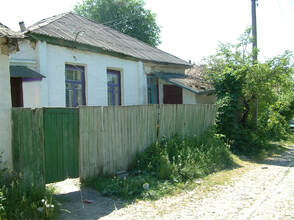 Following a trip to Poland in August, I wrote about the revival of the Jewish quarter of Krakow, with its Jewish restaurants, Jewish festival and synagogue renovations. Now attempts are under way to undertake a yet more unlikely revival across the border in Ukraine.
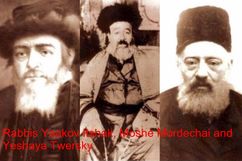
The town of Mezhbizh in western Ukraine is famous as the home of the Baal Shem Tov, the founder of the Hassidic movement in the 18th century. Mezhbizh has become something of a pilgrimage site for tourists, mostly Hassidic Jews, visiting from Israel. Some are even returning to the town to live, and renovating the shtetl that was home to around a third of the town’s population before pogroms, emigration and the Holocaust wiped the Jews from this part of the map. The shtetls of Eastern Europe were once vibrant communities, home to millions of Yiddish-speakers, as I describe in my historical work A Forgotten Land. Numerous writers of the time wrote of the world of the shtetl – brothers Isaac Bashevis and Israel Joshua Singer, Sholem Aleichem (apparently a distant relative of mine, but I am yet to discover our common ancestor), Bella (wife of artist Marc) Chagall and Elie Wiesel to name but a few. In the Russian empire, pogroms from 1881 onwards prompted waves of emigration that began to decimate the population of the shtetl, a process that culminated, of course, in the Holocaust when the remaining Jewish inhabitants were exterminated en masse. In this part of the world, the process generally involved mass shootings rather than deportation to concentration camps, the most famous being at Babi Yar, a ravine on the outskirts of Kiev where 34,000 Jews were killed in 1941 (see my blog post of 27 January 2017 for more about Babi Yar). Today Mezhbizh is a small town of 2,000 inhabitants, down from as many as 10,000 during the era of the Baal Shem Tov. In those days it was a regional centre and a third of its residents were Jewish. Their numbers swelled every Sabbath and Jewish holiday as devotees travelled from miles around to worship at the Rebbe’s synagogue and express their devotion to the famous Rabbi and subsequent Hassidic Rebbes. A Hassidic cemetery was built near the Baal Shem Tov’s grave. The illustrious Rebbe’s remains now reside in a white marble tomb inscribed in Hebrew script, which draws thousands of Hassidic pilgrims each year. To accommodate the tourists, infrastructure has been built including a large hotel catering for Orthodox Jewish customs, a kosher restaurant, a yeshiva and Torah institution. And now an initiative has developed to recreate the Mizhbizh shtetl, renovating old Jewish homes abandoned three-quarters of a century ago. Numerous single-storey houses built of mud and brick or straw stand derelict on the site of the old shtetl, and around a dozen are currently under reconstruction aimed at becoming homes for Jewish families wanting to return to live in the town. Some members of the Hassidic community have already left Israel and set up home in Mezhbizh. In two-to-three years, entrepreneurs claim, the shtetl will have a Jewish-Israeli street with up to three renovated synagogues. Mezhbizh is not the only Ukrainian town to attract Jewish visitors from overseas. Famously Uman, in central Ukraine, draws tens of thousands of tourists each year for the High Holy Days to visit the grave of Rabbi Nachman, the founder of the Breslov Hassidic movement, and a great-grandson of the Baal Shem Tov. Not all are Hassidic believers, for according to tradition, the rabbi promised to intercede on behalf of anybody praying at his grave on Rosh Hashanah. In Uman too, the rabbi’s grave has been renovated, with funds donated by Jewish tycoons from around the world. Hotels and hostels have popped up and locals have carried out house renovations to provide accommodation for the visitors. A few hundred Israelis have made Uman their home and the annual pilgrimage has become the town’s major source of income. In 2005 I visited Berdichev, once known as Russia’s Jewish capital with a population of over 50,000, some four-fifths of whom were Jewish. The large Jewish cemetery is impressive, with acre upon acre of beautiful old graves overgrown with vegetation. A path between the graves leads to a new mausoleum built above the grave of Rabbi Levi Yitzhak, a prominent Hassidic leader. The tomb has become another pilgrimage site for Jewish tourists. The cemetery is also home to the rabbis Moshe Mordechai Twersky and Tsvi Arye Twersky of Makarov, in whose rabbinical court my great-grandfather Meyer grew up and hoped to stay forever. Thanks to money sent from abroad, their graves are topped with newly hewn gravestones of slate and marble and housed in a small, painted mausoleum. Meyer’s own grandfather – my great, great, great grandfather – was advisor to the famous Reb Dovidl Twersky of Talna. Reb Dovidl was the grandson of Rabbi Nochum Twersky of Chernobyl, a disciple of the Baal Shem Tov. When I visited Talna, now known as Talnoye, we found Reb Dovidl’s grave in a dirty concrete box housed in an old shack covered with graffiti. It lay at the end of a dingy alley that smelt of urine, on the edge of what was once a Jewish cemetery but had become an overgrown wasteland littered with old tyres. The site has since been renovated, thanks to the editor of the local newspaper who spearheaded a fundraising effort to have the rabbi’s remains interred in surroundings more appropriate to the founder of one of the most revered of Hassidic dynasties. The story of the renovation of the Mezhbizh shtetl comes from an article on ynet.news.com by Dr Yoel Rappel. To read the full article, please click here https://www.ynetnews.com/articles/0,7340,L-5443742,00.html  Ten years ago I travelled with my Dad to America for a family visit. It was the first time I had met most of his first cousins – and it turned out to be the last time I saw his sister, my dear aunt Lil, who died a few years later. One of Dad’s relatives, irrepressible and wonderful cousin Betty, is a psychic and clairvoyant. Betty is much on my mind at the moment as wildfires rage around Los Angeles, forcing her to evacuate her home.
“I know you are a writer, but have you ever thought about doing documentaries?” she asked me back in 2008. “I’d love to make documentaries!” I replied. “Well, you will.” And today, ten years on, the first documentary I have been involved in is being broadcast on the BBC's World Service radio station. It’s a ten-minute piece about the lost Jewish world of the Eastern European shtetl, using anecdotes recounted by my grandmother about her early life back in Ukraine – then part of the Russian Empire. Mostly when I give talks about my work, I focus primarily on the dramatic major events that affected Russia’s Jewish community at the time – pogroms, World War I, the Russian Revolution and civil war. But the documentary concentrates on more mundane aspects of day-to-day life, such as Sabbath rituals in my grandmother’s house, relations with the local Ukrainian population, the Rabbi’s court where members of my family lived and worked, and a crazy and somewhat comical incident that landed my great-great grandmother in jail, to the horror and embarrassment of the whole family. The documentary is based on snippets of recordings made by my father back in the 1970s of my grandmother telling stories about her early life in Russia. They are recorded in Yiddish, the language of the Jews of Eastern Europe. It is a language once spoken by around 12 million people that transcended national boundaries, but which was almost wiped out by the holocaust. The vast majority of the Jews killed in the Nazi death camps would have spoken Yiddish as their mother tongue. Today the language is undergoing something of a revival, in the US in particular. Surprisingly there are still up to two million Yiddish speakers in the world. You can sign up to Yiddish evening classes, watch Yiddish theatre performances and attend Yiddish dance parties. In 2017, the Yiddish Arts and Academics Association of North America was born, with a mission to promote Yiddish language and culture through academic and artistic events and through Yiddish food. “The goal,” says founder Jana Mazurkiewicz Meisarosh, “is to make Yiddish culture hip, modern and interesting.” In the US, “Yiddish has been trapped within two discrete, hermetic spheres: the ultra-Orthodox sphere, which engages the religious aspects of Yiddishkeit, and the academic sphere, which tends to study secular Yiddishkeit of the past. As a result, Yiddish language and culture … is often viewed as a relic of the past, and fails to find resonance in daily life and modern culture,” she says. It’s a fascinating and worthy goal, to bring back to life a language that came close to extinction. The culture of the shtetl is unlikely to be reborn outside of the most restrictive Jewish communities, but if it can gain further resonance in today’s world, this is surely something to celebrate. Listen to the documentary here: www.bbc.co.uk/programmes/w3cswsp3
|
Keeping stories aliveThis blog aims to discuss historical events relating to the Jewish communities of Ukraine, and of Eastern Europe more widely. As a storyteller, I hope to keep alive stories of the past and remember those who told or experienced them. Like so many others, I am deeply troubled by the war in Ukraine and for the foreseeable future, most articles published here will focus on the war, with an emphasis on parallels with other tumultuous periods in Ukraine's tragic history. Archives
March 2024
Categories
All
|
 RSS Feed
